
Natural stone has inherent variation in veining, colour, movement, and structure. For projects involving multiple unit types, floors, and installation areas, these natural variations need to be managed carefully before shipment so that the materials can be installed in line with the intended design.
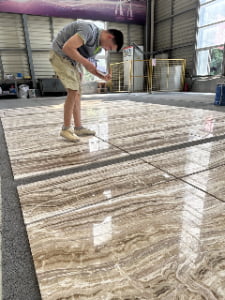
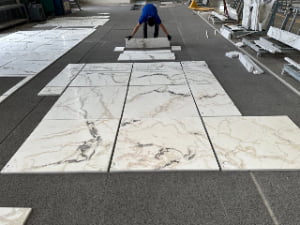
The photos below show the dry lay inspection process for a Roma Impression marble project. The work is carried out at one of our qualified stone processing partners with experience in project-based fabrication. This project includes cut-to-size flooring pieces, border strips, perimeter pieces, and related components for residential bathroom and floor applications.
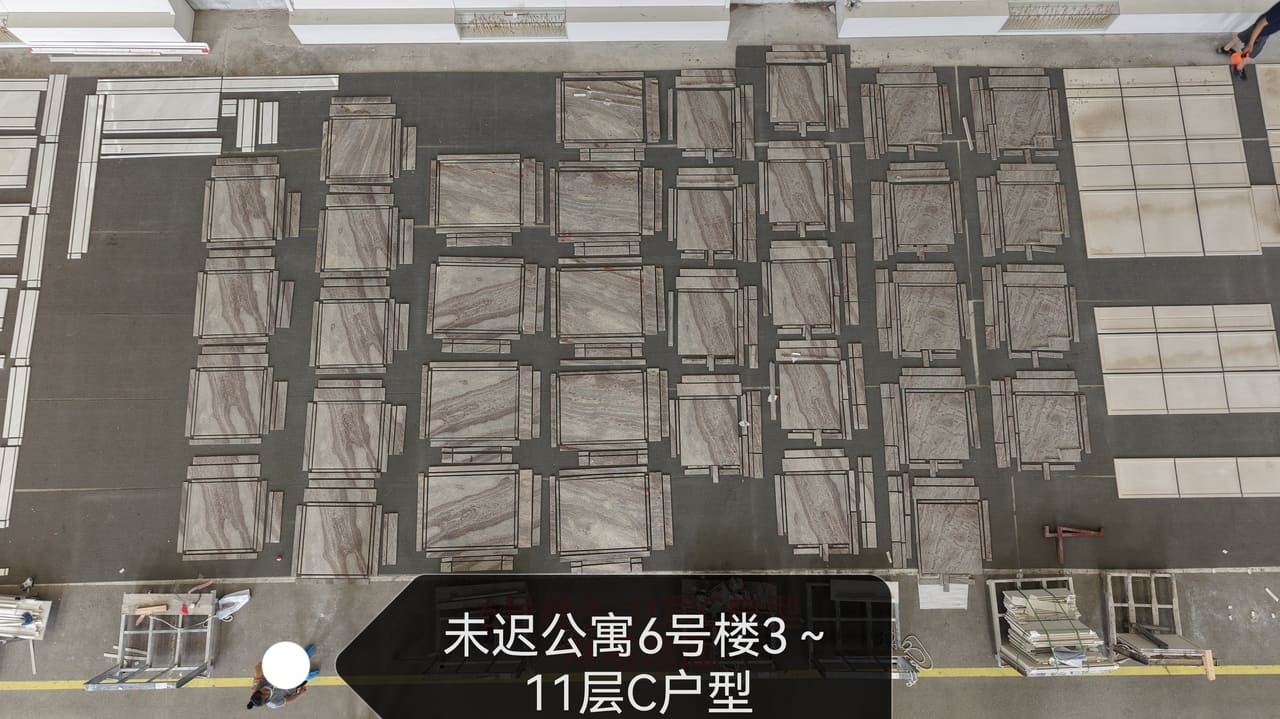
After fabrication and before final packing, our QC team reviews each installation set according to the approved drawings, cutting lists, and packing identification requirements.
Starting with Drawings and Cutting Lists
Project management begins with confirmation of the drawings, dimensions, quantities, and identification system for each installation area. For projects with repeated unit types or multiple floors, materials are not managed only by size. They are also organized according to building, floor, unit, room, or installation area.
Before the dry lay inspection, we review:
– Approved drawings, dimensions, and quantities for each area
– The relationship between main floor pieces, borders, thresholds, and smaller components
– Vein direction and intended installation orientation
– Surface finishes, edge details, and interface requirements
– Packing references and site identification methods for each installation set
This preparation helps reduce communication gaps during fabrication, packing, and site installation.
Dry Lay by Installation Area
During the dry lay process, fabricated Roma Impression marble pieces are arranged in the inspection area according to the relevant drawings. Main pieces, border strips, narrow pieces, and other related components are placed together so that the complete room or installation area can be reviewed as a set.
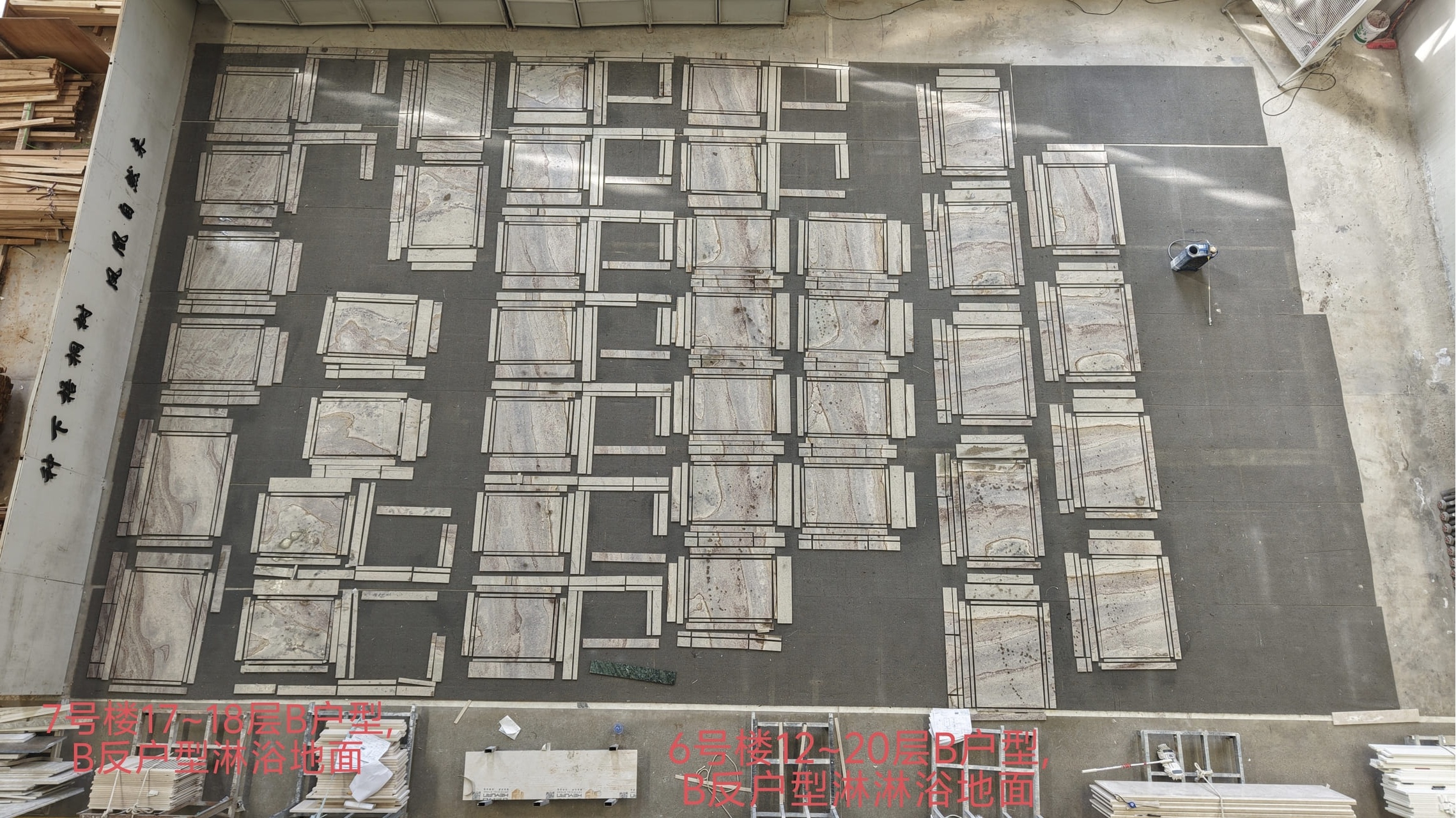
As shown in the photos, materials for different rooms and unit types are grouped separately. The purpose is not to make natural stone look completely uniform. Instead, it is to organize the natural variation of the material appropriately within each intended installation area.
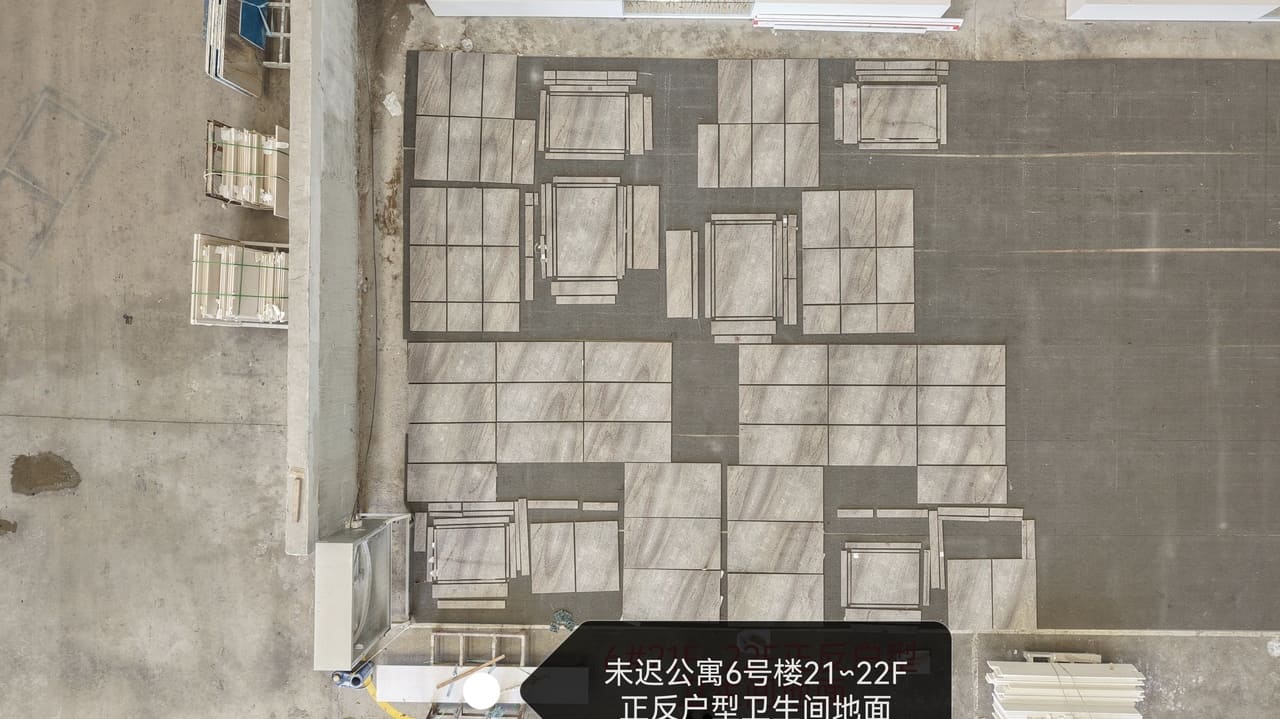
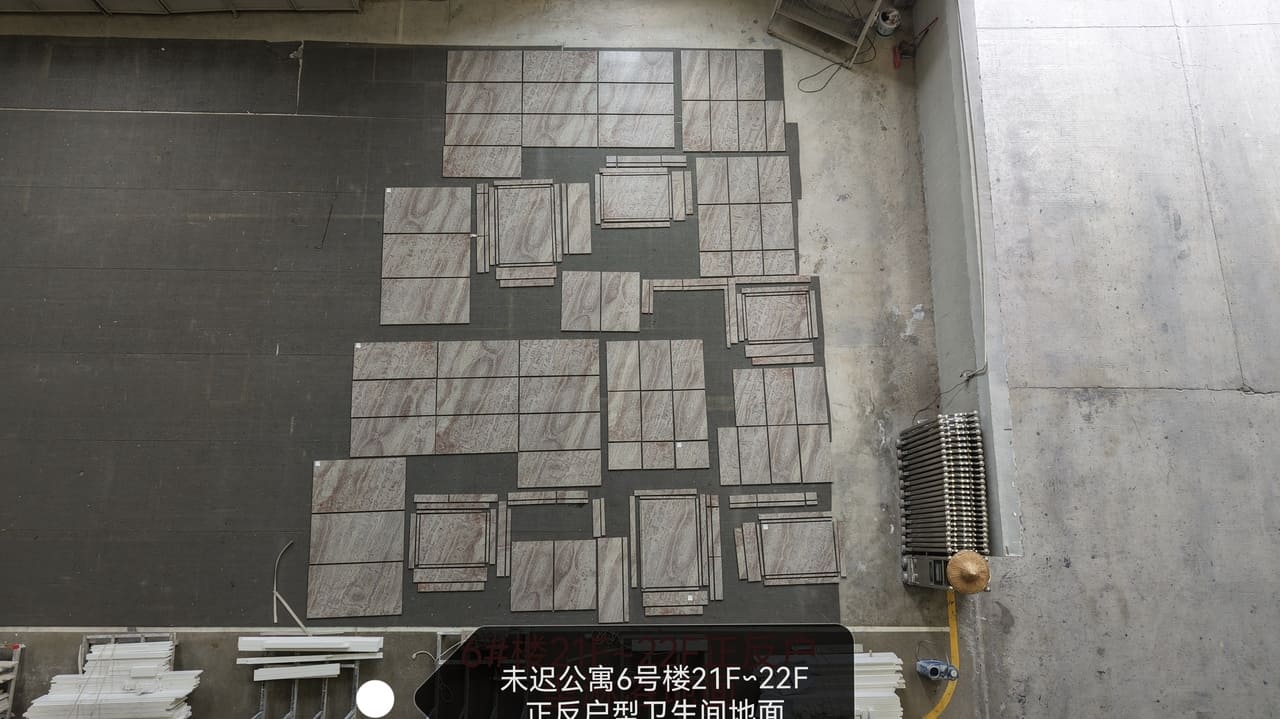
Our QC team reviews the following points:
- Vein Direction and Visual Continuity
Roma Impression marble features natural linear movement and tonal variation. By arranging the pieces before packing, our QC team can check whether the vein direction follows the approved layout and whether adjacent pieces work together appropriately.
Where adjustment is possible within the available material batch, the sequence of pieces can be refined before packing.
- Shade and Pattern Distribution
Natural stone does not have completely uniform colour or pattern. Checking each piece individually cannot always show how the finished installation will appear.
By reviewing materials room by room or area by area, we can assess the distribution of shade, veining, and natural movement within the same space. This helps maintain the natural character of the stone while supporting a balanced installation result.
- Dimensions and Fabrication Details
The dry lay process is also an important stage for reviewing dimensions and fabrication details. Based on the cutting list and drawings, our QC team checks the relationship between main pieces, borders, narrow strips, and other smaller components.
Any issues identified during this stage can be communicated to the processing team before packing, helping to reduce unnecessary adjustments at site.
- Completeness of Each Installation Set
In project installation, missing border pieces, narrow strips, or small cut-to-size components can affect the installation schedule. After dry lay, we check that the required materials for each area are complete and that the relevant packing and identification information is in place.
- Identification, Records, and Packing
After the dry lay inspection is completed and approved, each installation set is marked and labeled according to the project reference system. Depending on project requirements, labels may include building number, floor, unit, room, area reference, installation location, or packing sequence.
Dry lay photos and related records are retained as part of the project quality management documentation. These records can provide useful references for the customer, project management team, and installers during shipment, receiving, and installation.
Materials are then packed by area, room, or installation sequence. Packing related pieces together helps reduce sorting work at site and makes it easier for installers to identify the required stone components for each location.
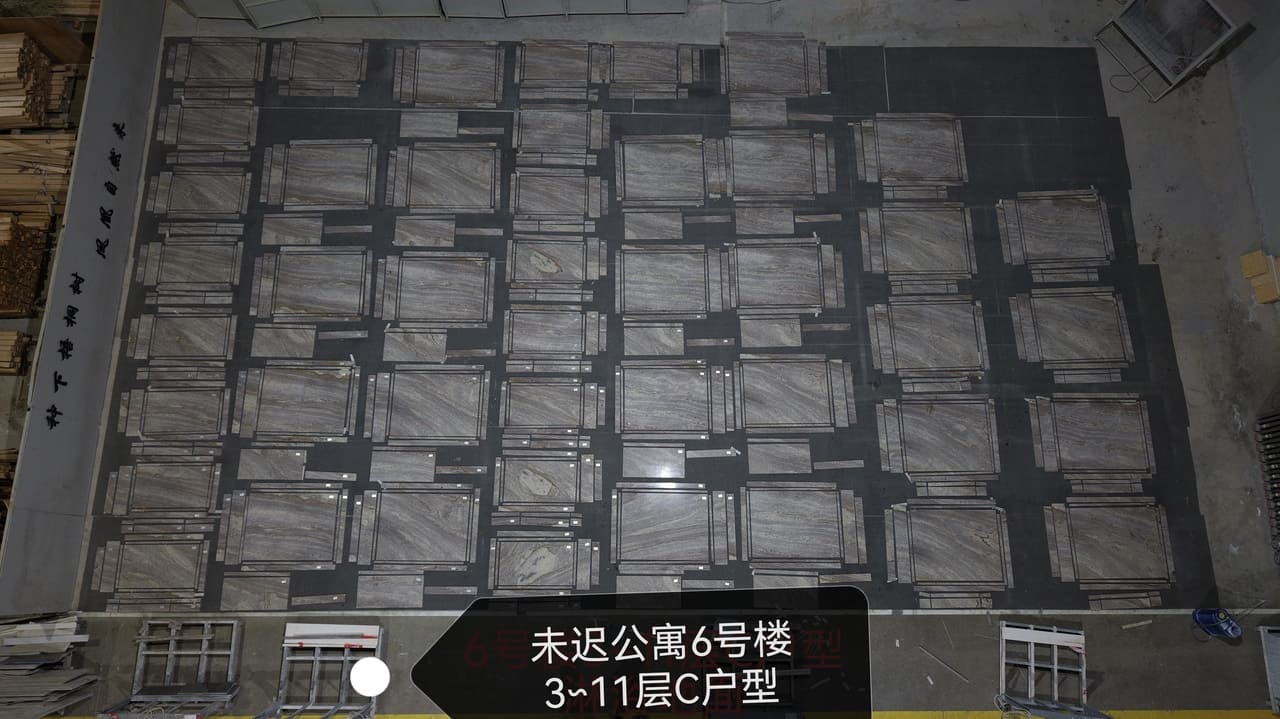
Project Management from Fabrication to Delivery
For cut-to-size stone projects, quality management is not limited to checking the dimensions of individual pieces. It also includes systematic management of material selection, grouping, identification, packing, and delivery information.
This Roma Impression marble dry lay is one part of our project quality management process. By reviewing each installation area before shipment, our QC team can confirm material relationships, set completeness, and packing logic more clearly, while providing traceable project records for transportation and site installation.